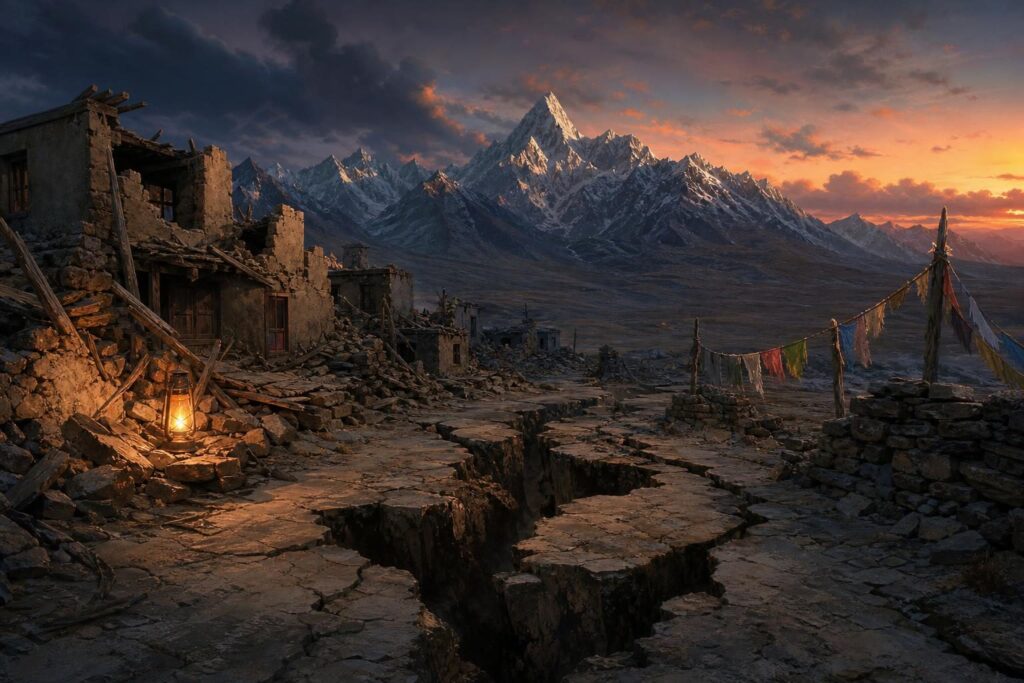
A magnitude 7.0 Tibet earthquake struck a mountainous area of the region on Thursday night, killing at least 16 people and injuring dozens, according to Chinese state media. Reports said the quake collapsed hundreds of homes.
The quake struck at 10:33 p.m. on Thursday, according to the Japan Times, which reported that more than 300 houses collapsed. Dawn reported that China ordered an "all-out" rescue effort after the quake killed at least 16 people and injured dozens.
Chinese authorities reported 65 people injured, 11 of them severely, according to BBC World. Power supply was cut in the affected area. Local media, cited by BBC World, said more than 12,400 people were relocated and that rockfall closed roads to high-altitude areas.
Premier Li Qiang called for urgent rescue and medical treatment, and China allocated 50 million yuan for disaster relief, BBC World reported.
Accounts of the epicentre differ. Xinhua, citing the local emergency management bureau, placed it in Baqên County, Nagqu region, about 400km north-east of Lhasa, according to BBC World. The US Geological Survey put the epicentre about 190 km east-northeast of Nagqu, at a shallow depth of around 10 km, according to Dawn.
The region has seen deadly disasters before. In January 2025, a quake in Tibet’s Tingri county killed at least 126 people, according to Dawn. Less than two months before this quake, floods and landslides in Tibet and Nepal killed at least 1,400 people, according to BBC World.
Independent verification of the figures is limited. Foreign media are largely restricted from Tibet, so Chinese state media and authorities are the main sources of information. All figures in the reports come from Chinese state media and officials, and no independent access to the affected area has been reported.
Videos of the quake have not been independently verified, BBC World said. The death toll of at least 16 is the only figure in the sources, and no later official update has been reported. Counts of collapsed homes also vary slightly between sources, and none has been independently confirmed. The Japan Times material was available only as a headline and a short excerpt. The sources do not include responses from Tibetan or Chinese opposition or rights groups.
Rescue and relief operations are continuing. More than 400 aftershocks have been registered, and residents are sheltering outdoors in subzero temperatures. Relocation and resettlement of affected residents is planned, though the sources give no timetable for it.
Sources
This article was written with AI assistance from the published reporting listed above. It is part of the World Brief daily news podcast.