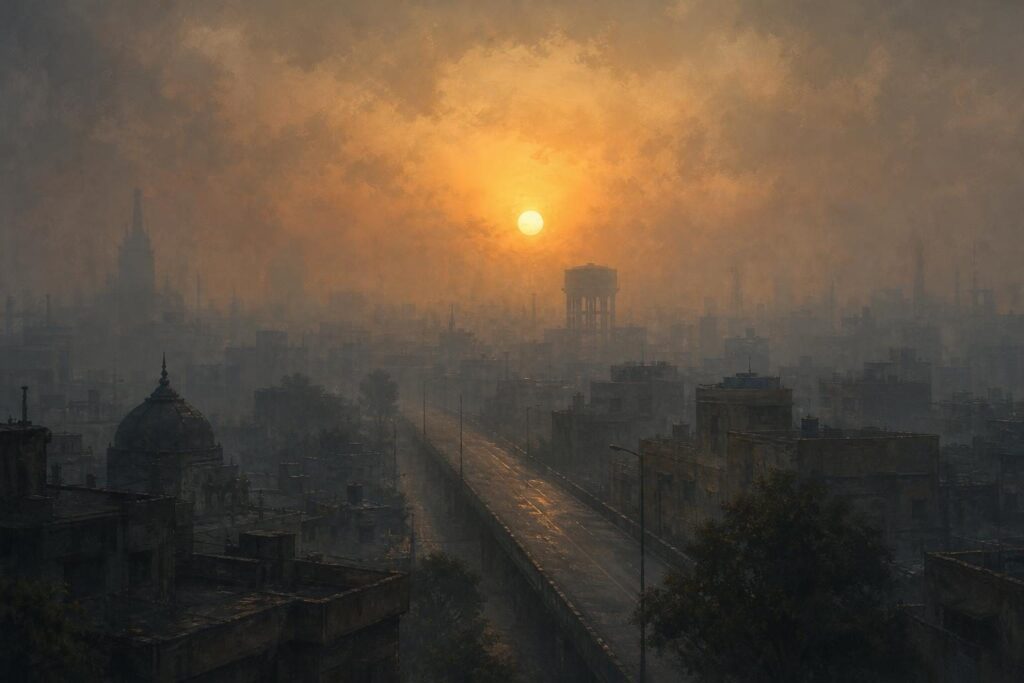
Delhi’s air quality has slipped into a familiar winter pattern, with a grey haze, a smoky smell and residents reporting irritation and breathing difficulty, as the city’s Winter Action Plan takes effect. The plan is the first major test of the measures for the season, according to BBC World, which reported on the rise in Delhi air pollution.
The Delhi government’s Winter Action Plan runs from 1 November to 28 February, covering the months when pollution usually spikes, according to BBC World. The plan restricts entry of older, more polluting vehicles registered outside Delhi. It also denies fuel to vehicles without a certificate showing they meet emission standards.
Demolitions and outdoor construction work that generate dust have been temporarily banned. The government has also asked offices to allow half of their employees to work from home, BBC World reported.
The second stage of the federal Graded Response Action Plan (Grap) is in force. Overseen by the Commission for Air Quality Management, it restricts diesel generators and the burning of coal and firewood, according to BBC World.
Delhi monitoring stations frequently record AQI readings above 300, which is classed as ‘very poor’, in winter. On particularly bad days, readings can reach 500, the top of India’s scale, BBC World reported. The international tracker IQAir has recorded readings close to 1,000 on some days. Delhi PM2.5 levels are often more than 25 times the WHO 24-hour guideline during pollution season, according to the same report.
Falling temperatures and slower winds trap pollutants near the ground. Crop residue burning in neighbouring states, vehicles, factories, construction dust and festival firecrackers add to the problem. Pollutants also travel into Delhi from neighbouring states, so the city’s measures can achieve only so much, according to Parthaa Bosu, an adviser to the Environmental Defense Fund.
Experts describe the early announcement of the plan as a step in the right direction. They say it will not be enough on its own and that success depends on enforcement.
Manoj Kumar of CREA calls for sector-by-sector emission targets over the next five years.
The Grap measures tighten in stages as pollution rises, and the Winter Action Plan runs until 28 February.
The key facts in this report rely on a single source, BBC World, and that source is an excerpt that ends mid-article, so its publication date is unclear. No current official reading for this week is confirmed. No response has been included from the Delhi government, the BJP or the Commission for Air Quality Management. No data yet shows whether the Winter Action Plan has reduced pollution.
Sources
This article was written with AI assistance from the published reporting listed above. It is part of the World Brief daily news podcast.