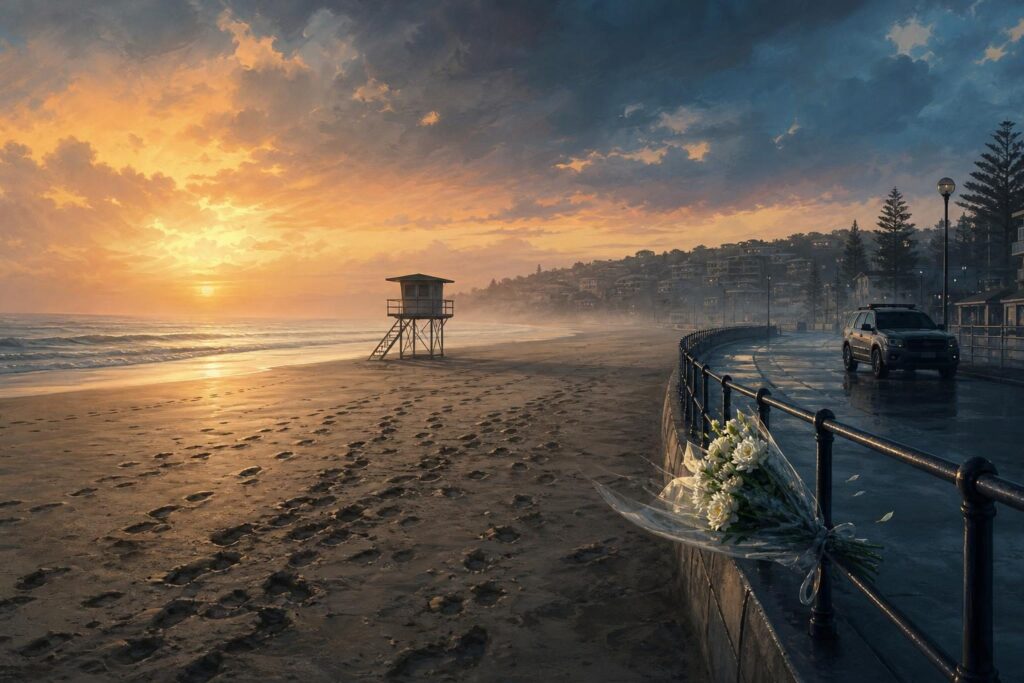
New South Wales police have begun deploying heavily armed Armed Response Command officers on Sydney’s streets, including busy tourist areas, after the Bondi Beach shooting in December that killed 15 people. The Sydney armed police patrols are part of heightened security following the attack.
According to BBC World, the Armed Response Command will deploy specially trained officers carrying long-arm rifles in busy tourist areas, at major events, sports matches and places of worship. New South Wales police said the unit will conduct "high visibility" patrols at major events, crowded public spaces, sporting venues and places of worship, according to SCMP.
Fifteen people, including a 10-year-old girl, were killed on 14 December when two gunmen opened fire on a Hanukkah event at the beach, according to BBC World. The BBC reports that the police operation will eventually consist of 250 officers. The sources do not say how many officers are currently deployed.
Naveed Akram has been charged with 78 offences, including 15 counts of murder, 40 counts of attempted murder, and one count of committing a terrorist act, according to BBC World. Akram’s charges are allegations that will be tested in court.
SCMP reported that the attack was motivated by Islamic State ideology. That motive attribution comes from SCMP alone, and it has not been independently confirmed in the sources available.
The attack was Australia’s worst mass shooting in almost three decades. It prompted sweeping gun law reforms and a crackdown on hate speech. SCMP reported that the shooting put pressure on Prime Minister Anthony Albanese’s government.
Jewish communities have welcomed the operation. Alex Ryvchin of the Executive Council of Australian Jewry said no Australian wants military weapons on streets, but the sight of body bags is worse.
Amnesty International Australia said it is concerned about the "militarisation of policing". The group asked the state government for assurances that the unit will not be used to suppress peaceful protests. The state government has not responded to that specific request in the sources available.
The sources do not describe the oversight or rules governing the use of the Armed Response Command. They also do not say when the first patrols began. Only BBC World and SCMP give details of the unit, and no independent second report of the patrols’ start date was provided.
The unit is set to expand toward 250 officers. Amnesty is seeking clear rules, independent oversight and assurances on protest policing from the state government.
Sources
This article was written with AI assistance from the published reporting listed above. It is part of the World Brief daily news podcast.