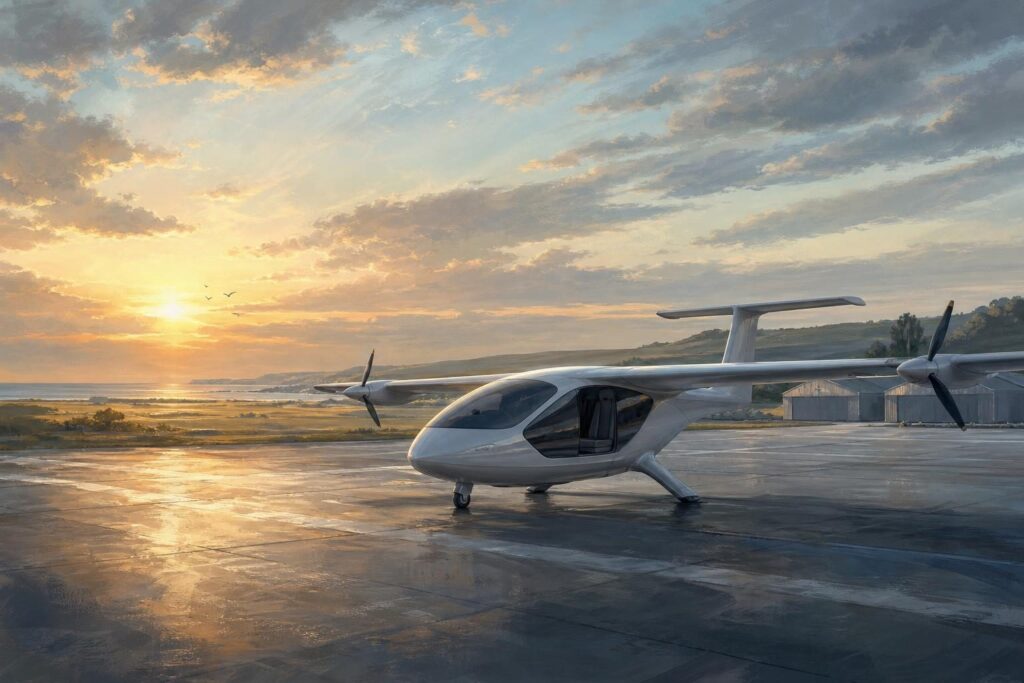
China’s state-backed COMAC said its CE-25A electric passenger aircraft completed its first crewed flight on Saturday in Binzhou, Shandong, a step toward commercial service. The 10-ton aircraft completed its maiden piloted flight, according to COMAC, which is the company’s own account of the test.
According to Dawn, the flight carried two pilots and one flight-test engineer. COMAC said the aircraft operated normally and that all performance indicators met expectations. No independent verification or observer account of the flight has been published.
Euronews reported that the flight covered around 60 kilometres and stayed airborne for 16 minutes and 38 seconds. These figures come from Euronews alone and have not been confirmed by a second source.
The CE-25A can carry 19 passengers, according to Dawn. It has a maximum takeoff weight of 10 metric tons, a cruising speed of 300 km per hour and a range of 400 km. Rather than conventional engines, it uses 10 electric ducted fans along the top of its wings. COMAC says this layout aims to reduce noise and enable shorter runways.
The aircraft was developed jointly with battery maker CATL, Shanghai Jiao Tong University and other partners. It made its first unmanned autonomous flight on Feb 2 this year and has completed 19 unmanned test flights. The plane is designed mainly for intercity commercial flights.
The China Civil Aviation Administration (CAAC) has formally accepted COMAC’s type certificate application, according to Dawn. That starts the inspection process required before commercial passenger service can begin. The aircraft must pass this process under transport-category regulations. No timeline for certification or commercial launch was given, and the CAAC has not responded to requests for comment on the timeline or the progress of its inspection.
Sources
This article was written with AI assistance from the published reporting listed above. It is part of the World Brief daily news podcast.